

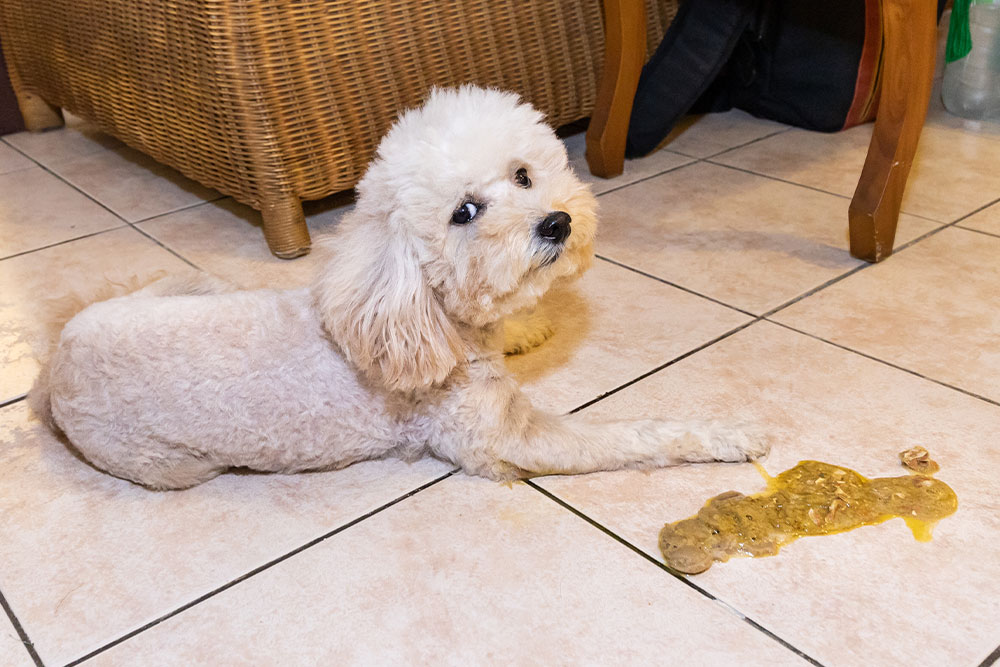
Vomiting is one of the most common reasons dog owners call or visit the veterinarian. While an occasional upset stomach may not be serious, frequent or severe vomiting can signal an underlying health problem that needs prompt attention.
Knowing what’s normal, what’s not, and when to seek care can help protect your dog’s health.
A Note From Our Doctors
At Peak City Veterinary Hospital, we understand how concerning it can be to see your dog vomit—especially when it happens suddenly. Many causes are mild, but others can become serious quickly.
Our goal is to help you recognize warning signs early and to provide clear guidance so you never feel unsure about when to call us.
With care,
The Doctors and Team at Peak City Veterinary Hospital
Common Causes of Vomiting in Dogs
Vomiting can occur for many reasons, including:
- Eating too fast or overeating
- Dietary indiscretion (getting into trash or table food)
- Sudden diet changes
- Food intolerance or allergy
- Parasites
- Infections
- Pancreatitis
- Foreign body ingestion (toys, socks, bones)
- Kidney, liver, or hormonal disease
Puppies and senior dogs are often at higher risk for complications.
What Does the Vomit Look Like?
The appearance of vomit can offer helpful clues:
- Yellow foam: Often bile or an empty stomach
- Undigested food: Eating too quickly or regurgitation
- White foam: Stomach irritation
- Blood or coffee‑ground material: An emergency
If possible, take a photo or note the timing and appearance to share with your veterinarian.
When Should I Be Concerned?
Contact your veterinarian if your dog:
- Vomits more than once in 24 hours
- Cannot keep food or water down
- Appears lethargic or painful
- Has diarrhea along with vomiting
- Vomits blood or foreign material
- Is a puppy, senior, or has chronic illness
If your dog is bloated, painful, or trying to vomit without producing anything, seek care immediately.
How Vomiting Is Diagnosed
At Peak City Veterinary Hospital, diagnosis may include:
- A thorough physical exam
- Review of diet and recent exposures
- Bloodwork to assess organ function
- X‑rays or ultrasound if obstruction is suspected
- Fecal testing for parasites
This allows us to treat the cause—not just the symptom.

How Peak City Veterinary Hospital Can Help
Our team provides compassionate, thorough care for dogs experiencing vomiting, including:
- Same‑day evaluations when needed
- Diagnostic testing
- Supportive care and medications
- Nutrition and feeding guidance
We’ll work with you to keep your dog safe and comfortable.
Our Final Thoughts
Occasional vomiting may not be serious, but repeated or severe vomiting should never be ignored. Early care can prevent complications and help your dog feel better faster.
Give us a call at Peak City Veterinary Hospital if your dog is vomiting or you’re unsure whether symptoms are urgent. We’re here to help every step of the way.




Leave A Comment